
Our Story
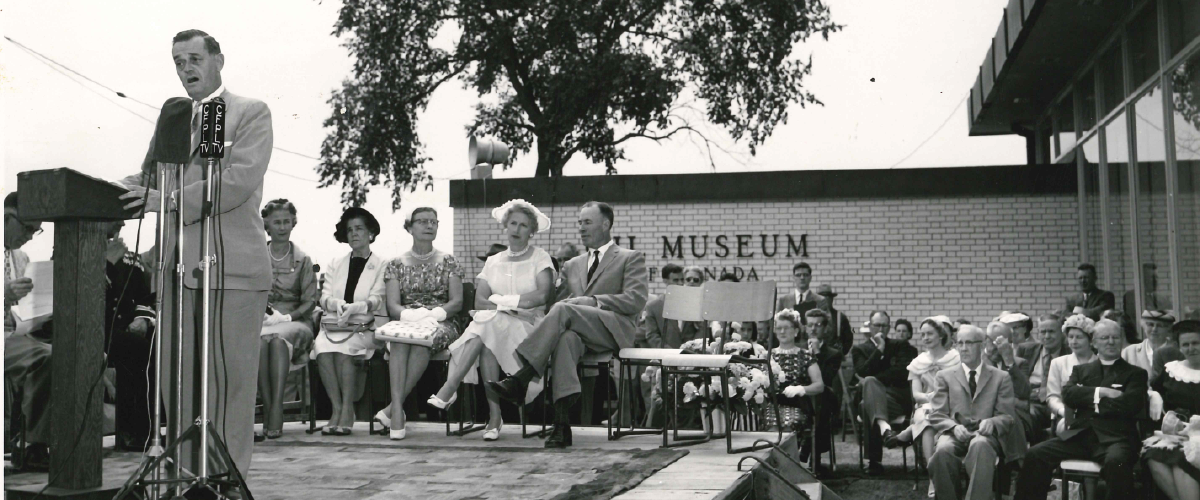
The Oil Museum of Canada, National Historic Site is a non-profit museum, owned and operated by the County of Lambton. We preserve the site of the very first commercial oil well of North America, dug by James Miller Williams in 1858. Since opening in 1960, visitors from all around the world tour our museum to learn our story of innovation and the contributions made by Canada's oil pioneers. They immerse themselves in historical facts that started the modern petroleum industry.
The Oil Museum of Canada is a National Historic Site and made up of seven buildings situated on 10 acres of land. Four of our buildings are historic structures and two have Ontario Heritage Designations. Our main building is open year round and our outbuildings are open from May to October. Our work is framed through County of Lambton Cultural Services Strategic Plan, which establishes a clear vision reflected in the County's needs, assets, constraints, and ambitions.
Since 1925, Oil Springs has held a National Historic Site designation for the Oil Springs oil fields. Reaffirming this national status in 2006. And in 2010, a committee formally defined the borders of the oil heritage cultural landscape. We know our local history has globally significant reach and in 2017, we made a bid for UNESCO World Heritage Site designation.
Acknowledgement of Ancestral Lands
Acknowledgement of Ancestral Lands Preamble:
We acknowledge that the Chippewa, Odawa, and Potawatomi peoples, referred to collectively as the Anishinaabeg, inhabited these lands at the time of transfer to the Crown by treaty. Lambton County was part of the Huron Tract Purchase, which was transferred under Treaty #29 in 1827, and also includes lands associated with the Sombra Township Purchase transferred under Treaty #7 in 1796, and Long Woods Purchase transferred under Treaty #21 in 1819. We also acknowledge the earlier Indigenous people who travelled these lands in the time of the Wampum treaties.
We acknowledge that we are all treaty people, with our own set of rights and responsibilities. Treaties are a foundational part of our society, and the settlement of Lambton County within a treaty area was made possible through the treaty process. The existence of treaties is proof that the first settlers of what is now Canada acknowledged First Nations as sovereign people and negotiated Nation to Nation. By understanding the colonial history of Canada we can renew our relationships with each other and move towards meaningful reconciliation.
Further, it is through the connection of the Anishinaabeg with the spirit of the land, water and air that we recognize their unique cultures, traditions, and values. Today, we are part of this same land that sustains all life, and it is the sacred responsibility of all people to ensure that the environment remains protected. Finally, we acknowledge that the inherent languages of the Anishinaabeg preclude any English/French meaning.
Acknowledgement of Ancestral Lands:
We acknowledge that this land on which we are gathered today is part of the ancestral land of the Chippewa, Odawa, and Potawatomi peoples, referred to collectively as the Anishinaabeg. It is through the connection of the Anishinaabeg with the spirit of the land, water and air that we recognize their unique cultures, traditions, and values. Together as treaty people, we have a shared responsibility to act with respect for the environment that sustains all life, protecting the future for those generations to come.
Language Pronunciations:
Anishinaabeg (ah-nish-i-nah-beg)
Chippewa (chip-uh-wah)
Odawa (o-dah-wah)
Potawatomi (pot-uh-wah-tuh-mee)
Our Mission & Our Mandate
Our Mission
The Oil Museum of Canada, National Historic Site, tells the story of Lambton County's important contributions to the development of the world's oil industry. Central to the Industrial Heritage Conservation District, the Museum benefits local residents and visitors by increasing their understanding and appreciation of this unique industrial heritage area.
Our Mandate
The Oil Museum of Canada is hereby continued for the purpose of preserving enhancement and presentation of oil heritage, artifacts, culture, and history of the County of Lambton and its surroundings.
Careers
The Oil Museum of Canada, National Historic Site is owned and operated by the County of Lambton. All employment opportunities are posted on the County's Job Board. We can only accept applications from individuals for specific jobs through the recruitment process outlined on the job board.
News


Join Our Mailing List
Stay up to date on latest news and events.